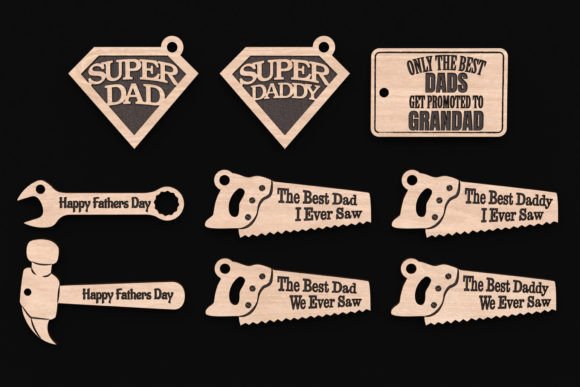
Laser Cut Fathers Day Keychain Svg Files
As a designer who spends more time troubleshooting stitch density than actually drinking coffee, I approach every new download with a mix of hope and skepticism. When I first opened the Laser Cut Fathers Day Keychain Svg Files, my immediate reaction wasn't about the holiday; it was about the geometry. The file set promises five distinct custom keychain designs, but for an embroidery professional, the real question is whether those laser-cut shapes translate into clean, wearable art or if they end up as tangled messes in the hoop.
The mood this design set creates is undeniably warm and tactile. It feels like a project that belongs in a boutique gift shop rather than a mass-produced catalog. The layout suggests a focus on silhouette and outline, which is crucial when we are talking about laser cutting combined with embroidery. If you are planning to use these files for a small business merchandise line, you need to know that the visual personality here leans towards modern craftsmanship. It isn't just a logo; it is a shape waiting to be stitched.
From Digital File to Finished Product: A Real-World Test
I recently had a scenario where a client needed a personalized gift for her husband, a man who appreciates utility but hates generic store-bought items. She wanted something unique for his daily carry, specifically a custom embroidered patch that could be attached to a rugged leather wallet or a canvas tote bag. This is exactly where the Laser Cut Fathers Day Keychain Svg Files shine, provided you understand the workflow.
In my test run, I treated the SVG not just as a vector image but as a template for a layered construction. The design works best when the laser-cut portion serves as the base layer, providing a defined edge that prevents fraying on fabrics like felt or denim. However, if you intend to use this as a standalone machine embroidery design on a sweatshirt, the approach changes. The "keychain" aspect implies a smaller scale, which means the detail level must be robust enough to survive the stitching process without losing definition. When I pulled up the file in my digitizing software, I noticed the lines were crisp, which is excellent news for avoiding that dreaded "bleeding" effect where satin stitches wander off the intended path.
For a handmade product like a holiday gift, the appeal lies in the finish. Imagine a customer receiving a custom apron with one of these designs embroidered near the pocket. The contrast between the precision of the cut edge and the texture of the thread adds a layer of perceived value that screams "handmade." It elevates the item from a simple craft fair trinket to a piece of functional art. This is the kind of finished product that generates positive reviews and repeat customers on platforms like Etsy.
Where This Design Fits Best in Your Workflow
The versatility of these files depends heavily on your application. For custom apparel, such as t-shirts or baby clothes, the design requires careful consideration of the fabric texture. Thin, stretchy fabrics can distort small details if the stabilizer isn't perfectly chosen. If you are working on a cap or a curved surface, the curvature might cause the inner corners of the design to pucker unless you adjust the underlay settings.
I found that this design excels when used as an embroidered patch. By combining the laser-cut backing with a satin stitch border, you create a durable accent that can be ironed or sewn onto jackets, beanies, or even kitchen towels. The stitch density needs to be monitored closely here. If the fill stitches are too dense, the fabric will become stiff and lose its drape, making it unsuitable for soft garments like a baby onesie. Conversely, if the density is too low, the design may look sparse and lack the professional polish required for commercial embroidery.
When considering digital embroidery file assets for your own inventory, think about how this design interacts with different thread colors. The visual impact relies heavily on contrast. On dark fabric, a light-colored satin stitch pop against the background creates a striking effect, whereas on light fabric, you might need a contrasting thread color to ensure the details don't get lost. Always test your thread colors on scrap fabric before committing to a full production run.
Navigating Potential Pitfalls and Technical Challenges
No design is without its flaws, and being honest about limitations is part of responsible reviewing. The primary challenge with the Laser Cut Fathers Day Keychain Svg Files lies in the fine details. If your hoop size is limited, or if you are trying to stitch this on a very small area, tiny lettering or intricate corners might become illegible. Embroidery machines have a physical limit to how much detail they can render, and pushing beyond that results in thread breaks and frustration.
Furthermore, textured fabrics like heavy wool or loose-weave linen can hide the precision of the design. The laser-cut element might not lay flat if the fabric underneath is too bulky. In these cases, using a proper stabilizer is non-negotiable. You need a stabilizer that provides enough rigidity to hold the shape without adding unnecessary bulk. For projects that require frequent washing, such as tote bag design elements or work aprons, you must ensure the stitching is secure enough to withstand abrasion. Loose threads can snag easily, ruining the aesthetic of a high-end personalized gift.
If you are a Etsy seller or a small shop product creator, remember that the digital preview does not always match the reality. What looks perfect in a printable mockup might suffer from tension issues once it hits the machine. This is why testing is so critical. Before listing a batch of craft business items, stitch a sample on the actual fabric you plan to use. Check the alignment, inspect the corners, and verify that the running stitch or satin stitch holds up over time.
Practical Advice for the Modern Designer
To get the most out of these files, start by checking the licensing terms. Many designers sell these as design assets for personal use only, while others allow commercial rights for a fee. Confirming whether you can sell finished items made with these files is essential to avoid legal headaches down the line. Additionally, review the file formats carefully. While the description mentions SVG, ensure you have the necessary conversion tools to turn that into a format your specific embroidery machine recognizes.
When preparing for a holiday embroidery rush, consistency is key. Use the same stabilizer, same thread brand, and same hoop placement for every unit. This attention to detail builds brand consistency and ensures that every embroidery project meets the same standard of quality. Don't skip the step of comparing light and dark fabric backgrounds during your testing phase. Sometimes a design that looks great on white cotton fails miserably on navy blue due to color bleeding or insufficient coverage.
Ultimately, the Laser Cut Fathers Day Keychain Svg Files offer a solid foundation for creating meaningful, tangible gifts. Whether you are making a baby embroidery keepsake, a wedding gift for a groom's party, or a boutique branding item for a local shop, the potential is there. But success lies in your hands as the designer. Treat the file as a tool, not a magic wand. Respect the limits of the machine, honor the properties of the fabric, and you will create a handmade product that customers will cherish long after the holiday is over.
Remember, the difference between a good design and a great one often comes down to the execution. Take the time to inspect small details, confirm the stitch density, and trust your instincts. With the right preparation, these files can become a staple in your collection of digital embroidery file resources, helping you deliver exceptional value to your clients and your own creative satisfaction.