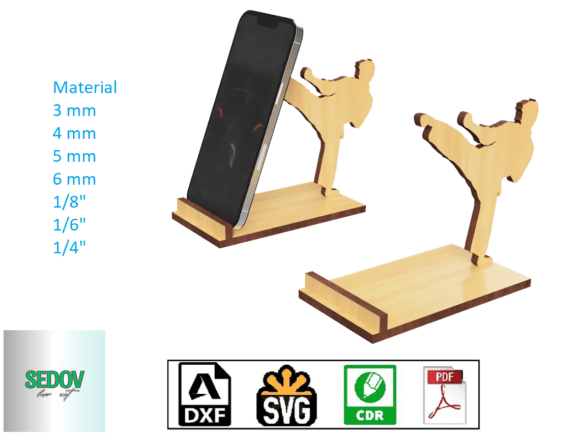
Laser Cut Phone Holder - Karate Figure
When I first unboxed the Laser Cut Phone Holder - Karate Figure, my initial reaction wasn't about its function as a stand, but rather how it feels as a design asset. As someone who spends hours evaluating embroidery files for clients and personal boutiques, I look past the novelty to assess the potential for stitching. This piece captures a dynamic moment—a karateka with a raised leg—that immediately suggests energy, discipline, and action. It creates a mood that is both playful and serious, making it an unusual but compelling choice for a machine embroidery design. The silhouette is bold enough to hold its own in a large hoop, yet intricate enough to demand precision.
The concept of combining a functional object with a thematic figure like this offers a unique angle for a creative entrepreneur. If you are an Etsy seller or run a small shop product line, you know that customers buy stories, not just items. A simple phone stand is common; a phone stand shaped like a martial artist is a conversation starter. However, before you rush to add this to your inventory, we need to talk about how this Laser Cutting template translates into actual thread on fabric. The transition from a wooden prototype to a stitched reality requires careful planning, especially when dealing with the complex angles of a raised leg and a dynamic pose.
Real-World Application: From Mockup to Finished Product
Let's imagine a real scenario. You are preparing a custom embroidered tote bag for a local martial arts dojo opening. The client wants something that reflects their brand without being too generic. You pull up the file for the Laser Cut Phone Holder - Karate Figure in your digitizing software. Your first thought is about the layout. The raised leg creates a diagonal line that naturally draws the eye. In a tote bag design, this diagonal flow works beautifully against the vertical handle structure.
However, the execution matters. When I tested a similar high-action figure on a canvas tote, the challenge was balancing the stitch density so the fabric didn't pucker while still capturing the sharp lines of the gi (the uniform). For the Karate Figure, the satin stitch would likely be used for the outlines to give definition, while fill stitch could cover the body to create a solid, impactful look. If you are aiming for a custom apparel project, like a sweatshirt embroidery for a team jacket, the figure might need to be scaled down slightly to fit the chest area without overwhelming the wearer. The dynamic pose fits perfectly on the back of a hoodie, where the raised leg can extend toward the hem, creating a sense of movement as the person walks.
For a baby item or nursery decor, the approach changes. Here, you might soften the edges by using a lighter color palette. Imagine a pillow cover featuring the figure in soft blues and whites. The Laser Cut Phone Holder - Karate Figure becomes less about the intensity of the sport and more about the cultural appreciation of balance and focus. This versatility is rare in design assets. It allows you to pivot from a rugged commercial embroidery project for a gym to a delicate holiday gift for a family member who loves Japanese culture.
Navigating Technical Challenges and Fabric Choices
While the visual appeal is strong, a professional designer knows that the devil is in the details. There are specific scenarios where this design needs to be handled with care. If you are working with a small hoop size, such as those used for caps or hats, the complexity of the raised leg might get lost. Curved surfaces like caps present a unique hurdle; the tension required to stitch the curves of the figure might distort the shape if the stabilizer isn't chosen correctly.
Textured fabrics are another consideration. If you attempt to stitch this onto a thick, textured wool or a rough burlap, the fine details of the karateka's hands or the folds in the gi might disappear under the fabric's grain. Similarly, thin or stretchy fabrics require a heavy-duty stabilizer to prevent the design from collapsing or shifting during the machine process. I have seen beautiful designs fail because the thread colors lacked sufficient contrast against a dark background. On black fabric, a dark grey outline might vanish, turning the figure into a vague shadow. Always test your embroidery file on scrap fabric that matches your final material to ensure the running stitch and other fill patterns remain visible.
Dense stitch areas are particularly risky. The legs and torso of the figure will likely require significant fill. If the density is too high, the fabric may become stiff and uncomfortable, which is a dealbreaker for wearable items like aprons or baby clothes. Conversely, if the density is too low, the design looks sparse and cheap. Finding the sweet spot is crucial for maintaining brand consistency and ensuring customer trust. A poorly stitched logo or figure can make a handmade product feel mass-produced, undermining the value you are trying to convey.
Strategic Notes for Designers and Makers
Before you commit to producing a batch of these products, there are several practical steps you must take. First, always test the design on scrap fabric. This is non-negotiable. Check the stitch density and see how the threads lay. Do they float? Are there gaps? Next, review the stabilizer requirements. Without the right backing, even the best digitized design will fail. Confirm the hoop size needed to capture the entire figure without cutting off the raised leg.
If you are selling this as a digital product or a finished physical item, verify the licensing terms. Many digital embroidery files come with restrictions on commercial use. Ensure you have the right to sell the finished goods derived from the Laser Cut Phone Holder - Karate Figure. Also, inspect small details closely. In a personalized gift, tiny errors are magnified. Use proper lighting to check for loose threads or misaligned stitches. Test the design in black and white mockups first to see if the composition holds up without relying on color. Compare light and dark fabric backgrounds to ensure the design remains versatile across different product lines.
For those looking to create printable mockups for their online store, this figure offers excellent opportunities. The dynamic pose translates well into promotional images for crafter business websites. You can showcase the figure on various items—kitchen towels, patches, or blankets—to demonstrate its adaptability. The key is to maintain a professional presentation. High-quality imagery combined with a well-executed embroidery project builds buyer engagement and drives sales.
Ultimately, the Laser Cut Phone Holder - Karate Figure is more than just a template; it is a statement piece that bridges the gap between traditional craftsmanship and modern utility. Whether you are creating a handmade product for a boutique or a small shop product for a global audience, this design has the potential to stand out. It requires skill to execute, but the reward is a finished product that feels unique, thoughtful, and deeply connected to the art of embroidery. By approaching it with caution, creativity, and technical precision, you can turn a simple laser-cut concept into a cherished keepsake or a best-selling item in your catalog.