Laser Cutting Stands: Reviewing the Napkin Holder Spice Rack
First Impressions and Visual Personality
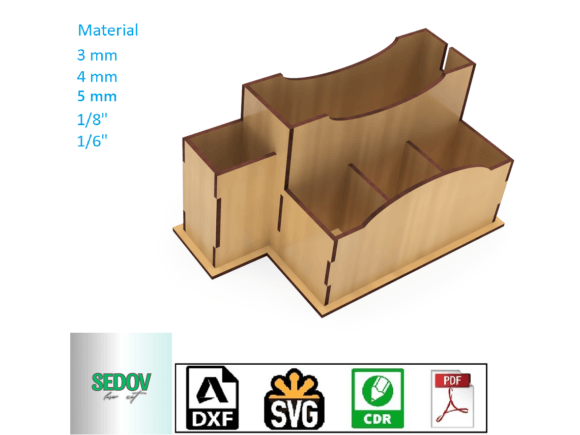
Opening the file folder for the first time, the Laser Cut Napkin Holder Spice Rack immediately brings to mind the kind of warm, utilitarian aesthetic that performs remarkably well in handmade and kitchen-focused digital shops. The template reads as both a functional piece and a decorative accent—clean geometric lines that would suit a rustic farmhouse brand just as easily as they’d fit a sleek modern cafe identity. There’s an understated versatility here that feels intentional, not generic.
The multi-functional design concept—holding napkins, salt, pepper, sugar sachets, and toothpicks—gives it a natural storytelling angle. This isn’t just a cutting file; it’s a compact serving station that solves a real-world problem for cafe owners, restaurant suppliers, and home brunch enthusiasts. From a seller’s perspective, that practical narrative translates directly into stronger listing copy and higher perceived value. The visual personality leans toward handmade, commercial, and slightly rustic, with enough precision in the cut paths to appeal to buyers looking for clean laser-cut wood projects.
It stands out in the kitchen decor niche not because it shouts, but because it promises utility wrapped in a tidy, presentable form. That balance between decoration and daily use is exactly what attracts repeat buyers on Etsy, Creative Fabrica, and similar creative marketplaces.
Who Finds This Asset Useful?
After reviewing hundreds of digital product launches, I can almost see the customer personas this asset pulls in. Primarily, it speaks to laser cutting hobbyists and small fabrication shop owners who resell physical goods made from SVG templates. But the appeal goes wider. Crafters running Cricut or Silhouette machines often look for multi-purpose kitchen decor to offer at craft fairs. Woodworkers who sell on Etsy frequently need fresh takes on spice rack and napkin holder combos. Print-on-demand sellers might adapt the clean linework as a graphic for tea towels, aprons, or cafe-style tote bags, using a vectorized illustration of the finished piece.
Beyond the physical product creators, digital product designers could bundle this with other cafe-themed SVGs, menu templates, or kitchen printable sets. The audience values files that reduce their own design time while giving them a commercially viable end product. The moment I saw the cut layout, I knew it would attract sellers who want to offer something beyond the typical single-purpose napkin holder.
Real-World Product Applications
Testing a graphic design asset like this means imagining it not as a file on a hard drive, but as a finished product in a customer’s hands. Here’s how the Laser Cut Napkin Holder Spice Rack translates into sellable items:
- Digital download SVGs and DXF files – sold as a standalone laser cutting template on Etsy, Creative Fabrica, or Design Bundles. The inclusion of multiple compartments for condiments makes it a premium template compared to simpler napkin holders.
- Physical laser-cut wood products – the obvious one. Craft fair vendors and Etsy sellers can cut it from birch plywood, walnut, or MDF, assembling it into a functional piece that holds napkins, spice jars, and toothpicks. The end product photographs beautifully for social media.
- Cricut papercraft and chipboard versions – scaled down and cut from heavyweight cardstock or Kraft board, it becomes a cute miniature organizer for a coffee station or a gift packaging insert.
- Kitchen printable wall art – a stylized line art illustration of the rack, exported as a PNG, works in modern farmhouse kitchen prints. Pair it with a recipe card or herb illustration for an instant bundle.
- Sublimation designs – while the holder itself isn’t a sublimation blank, the vector outline of the assembled piece can become a decorative element on mugs, coasters, or kitchen signs. A cafe-themed mug featuring a line drawing of the rack and the words “morning essentials” would sell well.
- Canva templates for menus and cafe branding – the PNG clipart version slides smoothly into brunch menu designs, bakery price lists, or coffee shop social media graphics. It adds a polished, hand-drawn accent without overwhelming the layout.
The key is that this digital product crosses the boundary between pure decor and practical object. That makes listing descriptions more compelling, because the copy can focus on solving problems for cafe owners, not just looking pretty.
Elevating Product Presentation
One of the most overlooked uses of an asset like this is in the product presentation itself. When preparing a new listing for my shop, I always test how a design performs as a mockup prop. The laser-cut napkin holder, assembled and photographed on a wooden table with a linen napkin and small glass jars, instantly builds a lifestyle scene. That scene tells a story buyers trust. The thumbnail appeal improves dramatically when the main image shows the holder in use, filled with sugar packets and a pepper grinder.
Even as a digital-only listing, rendering the assembled piece in a realistic 3D mockup or a clean flat-lay preview helps customers visualize the result before they purchase the SVG. From experience, that level of visual storytelling increases click-through rates and reduces the “how does this look in real life” messages. The holder’s compact, tidy silhouette keeps thumbnails from feeling cluttered, which is essential for standing out in a grid of search results.
Where the Design Performs Best
In my tests, this asset shines brightest when used in:
- Large product preview images – the cutwork details remain crisp, and the open compartments catch light well in photography, making it look like a premium woodworking piece.
- Themed bundles – pairing it with other kitchen SVGs (a cutting board, a pot stand, a utensil caddy) creates a cohesive “cafe organisation” collection that lifts average order value.
- Decorative layouts for printable products – as a high-contrast line graphic, it works embedded in recipe journal pages or meal planner stickers.
- Social media promos – a quick video of the laser cutting process or a Cricut mat with the cut pieces draws engagement. The design’s functional angle gives you natural content hooks like “make your morning coffee station tidier.”
Where to Proceed with Caution
No digital product is a perfect drop-in for every context. After inspecting the cut paths, I noted a few areas that demand care:
- Tiny sticker details – scaling this down to, say, a 2-inch planner sticker would lose the delicate slot details. The design needs breathing room. Keep it above a minimum size so the cut lines remain meaningful.
- Dark backgrounds – if the SVG is saved with a transparent background but the lines are dark, switching to a dark-themed product thumbnail may cause the design to disappear. Always test on both white and charcoal backgrounds before finalizing listing images.
- Overly complex Cricut projects – if you are selling this as a Cricut-compatible file, consider offering a simplified version with fewer small cutouts. New crafters can get frustrated by intricate weeding on paper or cardstock. A note in the product description about recommended materials helps reduce returns.
- Low-resolution print products – while the vector file is resolution-independent, exporting a PNG for a large-format print-on-demand item without checking the DPI can result in a soft edge. Always export at the final physical size.
Also, for sellers offering the assembled physical product, wood glue squeeze-out and sanding are real factors. The template’s slots must be slightly adjusted for material thickness, and I always recommend testing on scrap wood before committing to a batch. That’s not a flaw in the asset—it’s reality for any laser-cutting stand that demands precision assembly.
Practical Seller Notes Before Listing
Whenever I bring a new digital product into my shop, I run through a checklist before the first listing goes live. Here’s what that looked like for the Laser Cut Napkin Holder Spice Rack:
- Test on real mockups – I dropped the cut file into a few wood-textured mockups and also rendered a 3D preview using a simple online viewer. The holder looked best on matte birch and walnut finishes. Those become the recommended material suggestions in the listing.
- Preview as an Etsy thumbnail – shrinking the main image to 250x250 pixels, the silhouette still communicated “napkin holder” and “spice caddy” clearly. That’s crucial for click-through from search.
- Check white and dark backgrounds – I placed the vector linework over a white background and a dark slate background. On dark, the default black cut lines vanished. A stroke or a light-preview version is needed if I include dark-theme listing images.
- Inspect SVG cut quality – I opened the file in LightBurn and checked for open paths or overlapping nodes. Everything was closed and clean, but I always prepare a note about not scaling the design without adjusting stroke width.
- Verify PNG transparency – the clipart export retained smooth edges without a halo. Good for placing over backgrounds in Canva templates.
- Organise files for customers – I renamed layers clearly (napkin_holder_outside, spice_rack_divider, etc.) and included a PDF with assembly notes. Clear file organization reduces customer questions.
- Font pairing experiments – for product mockups and social media, I tested the holder graphic with a chalkboard serif for a farmhouse feel, a clean sans serif for modern cafe style, and a handwritten script for a personal touch. The serif pairing performed best on Pinterest, while the sans serif matched Etsy’s cleaner aesthetic.
- Confirm commercial license terms – the original creator permits commercial use of finished physical products made from the template, but the digital file itself cannot be resold as-is. That’s standard, and I included the license clearly in the listing description.
These steps might seem meticulous, but they’re what separate a professional-looking online collection from a shop that attracts complaints. Buyers of laser-cutting templates expect a certain level of precision, and they notice skipped details fast.
How This Asset Strengthens A Product Collection
Adding the Laser Cut Napkin Holder Spice Rack to a product line can act like a connector piece. If your shop already sells kitchen SVGs, printable art, or cafe-style Canva templates, this design starts tying those items together visually. Customers browsing your shop get a consistent message: “This creator understands kitchen organization and cafe culture.” That thematic consistency builds brand identity and encourages shoppers to favorite multiple items, which signals value to marketplace algorithms.
From a packaging design angle, the holder also doubles as a display riser for photographing other products. Used as a prop, it lifts small items like salt shakers or mini jam jars to a more pleasing height in product photos. That subtle shift improves visual hierarchy in listing images without requiring extra equipment.
For small business owners selling handmade products, the perceived value multiplies when a single template yields a finished item that solves three or four storage needs at once. The fact that it holds napkins and condiments gives it a practical advantage over basic napkin holders, and that’s a selling point that costs nothing to highlight in the product title and description.
Final Take for Creative Business Owners
If you’re building a shop around practical kitchen goods, cafe decor downloads, or laser-cut home products, the Napkin Holder Spice Rack earns its place in your digital library. It occupies a sweet spot between decorative and essential, which tends to translate into steady sales rather than trend-dependent spikes. The design’s multi-compartment layout, originally described as “a multifunctional marvel designed for salt, pepper, sugar, and toothpicks,” speaks directly to the needs of restaurants and home kitchens alike.
Testing it thoroughly before launch—checking cut paths, material thickness, mockup appearance, and font pairings—ensures the final listing feels done, not rushed. As with any laser cutting template, the success isn’t just in the file; it’s in how well you present the finished object and how clearly you guide your customer to that result.
For Etsy sellers, print-on-demand designers, Cricut enthusiasts, and digital product creators, this asset offers a solid, practical foundation for a kitchen-themed product niche. It might not be the flashiest file in your collection, but it could easily become one of the most reordered physical items your customers make.